Back to Programme
Session 24
Cultural productive landscapes and rural water infrastructure systems
Organisers: Charis Christodoulou (Aristotle University of Thessaloniki)
Saturday, 28 November 2026 · 18:00–19:30
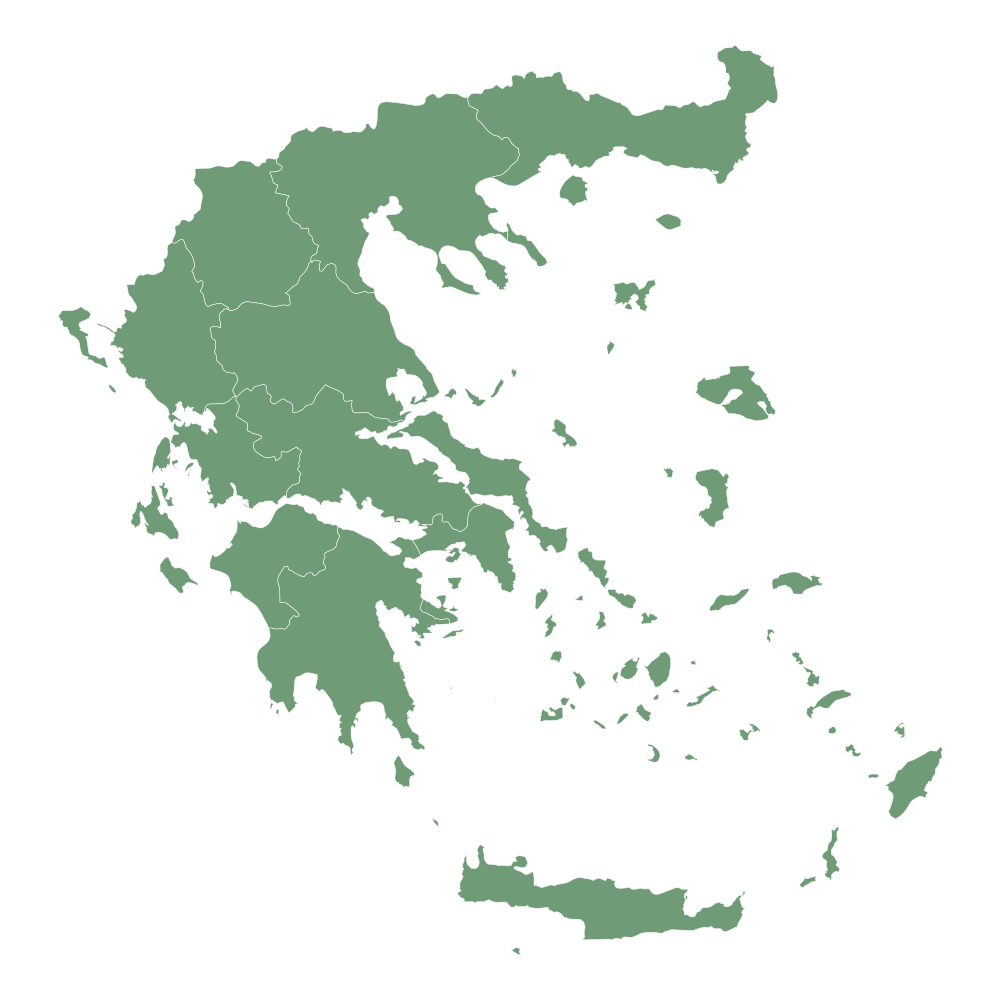
Room 3, Harokopio University of Athens (HUA)
About this session
Historically productive areas around and between traditional rural settlements in mediterranean climates constitute important cultural landscapes. They are physically urbanizing while their population is declining and they are increasingly abandoned and not taken care of as cultural landscapes while they are transformed into tourist and tourism-oriented areas. The starting points for discussion are the recommendations for redefining urban-rural connections and the countryside by the United Nations, especially the relationships of rural settlements within their wider landscapes, the modern conceptualizations of landscape in international conventions, but also the growing interest in traditional water and irrigation infrastructures as commons in the climate adaptation discourse.
Water infrastructures have always been parts of wider socio-spatial networks and relations taking care of land and social reproduction within the local communities. In political ecological terms they constituted complex techno-environmental systems combining networks of physical facilities such as aqueducts, irrigation channels, bridges, mills, paths, tanks, etc) as well as institutions and powers to collectively support and manage their effective and seamless functioning for the common good.
The session aims to enhance the discussion of contemporary regeneration of rural landscapes, also their adaptation in climate change. It invites papers that address active local practices and regional conceptualizations of water infrastructures as cultural heritage in physical, relational and institutional terms, also as highly environmentally and socially important tangible and intangible legacy in the present. The session also welcomes research papers around different geographies and mappings of material and immaterial aspects of rural water infrastructure systems.
Presentations are listed in the order set by the session organisers.
Presentations5
Slot 1 · Sat 28 Nov · 18:00–19:30
1.Rhine's landscapes as a socio - natural assemblance
Quentin Scherrer1, Jarre Ameye2, Christos Bakalis3
- 1Political Sciences student, University of Strasbourg
- 2BA in Marine Sciences, Wageningen University & Research
- 3PhD, Cultural and Environmental Sociology, faculty member in the School of Social Sciences, University of the Aegean
Abstract
This paper proposes the Rhine River as a key natural component of the formation of both natural and cultural landscapes in regions of western and northwestern Europe. The river conceptualized as an “actant” actively participating in the co-production of social, economic, and political relations across scales, of a transboundary socio-environmental assemblage. Specifically, the paper explores how Rhine operates as an actor, as well as a cultural and mnemonic infrastructure, deeply embedded in collective memory and identity, while also being mobilised within contemporary economic dynamics, including tourism and cross-border cooperation. By examining Rhine as a relational network connecting rural productive landscapes, urban infrastructures, and institutional frameworks, this contribution highlights how water systems function as both material and symbolic commons. It ultimately argues that understanding Rhine through an assemblage lens allows us to rethink the rigid separation between nature and society, and to better grasp the challenges of managing cultural landscapes in the context of climate change and European integration. The analysis draws on insights from assemblage theory and Actor-Network Theory. Historically, Rhine has structured settlement patterns, trade routes, and urban development, notably contributing to the emergence of cities as major crossroads within European space. At the same time, it has been profoundly transformed by human interventions, particularly through canalization projects, hydroelectric infrastructures, and flood-control systems, illustrating the hybrid and co-constructed nature of landscapes. This work discusses the contribution of Rhine upon the Alsatian landscape in parallel with other contexts shaped by the river notably in the Gelderland province landscape. Both regions are deeply influenced by the Rhine’s hydraulic, economic, and symbolic functions. The comparative approach provides a complementary viewpoint, allowing us to examine how similar material infrastructures and environmental constraints are translated into different urban forms, governance models, land management and cultural practices across national settings.2.Rural Water Infrastructures as cultural landscapes: local knowledge, climate adaptation, spatial planning and governance challenges in the mountain area of Pelion-Greece
Charis Christodoulou1, Pinelopi Vergou2
- 1Aristotle University of Thessaloniki
- 2University of Thessaly
Abstract
Worldwide, extreme events driven by climate change are responsible for the destruction of lives, livelihoods, and property, with particularly acute impacts across urban-rural spaces. In addition, rapid climate change, combined with growing inequalities, pose threats to human existence and well-being, and jeopardize the prospects of communities and future generations to thrive. Redefining urban-rural relationships as a continuum rather than a strict dichotomy, this paper views rural settlements not as isolated, purely agricultural areas, but as integral components of broader, multi-functional urbanized landscapes linked to urban areas through flows of people, goods, and ecosystem services. Many rural areas face a range of interconnected challenges: shrinking and ageing populations; limited economic opportunities; challenge of balancing agricultural production with environmental conservation and tourism, while maintaining traditions and architectural identities in the face of rapid change. This paper examines how former agricultural communities and traditional settlements respond to extreme environmental events through locally embedded water management practices. It argues that rural water infrastructures such as irrigation systems and communal water distribution networks, function not only as technical systems but also as cultural landscapes that sustain both productivity, local social networks and thus, resilience. It explores how these local practices adapt to environmental stress while analyzing how fragmented or inconsistent governance and spatial planning can undermine them. Furthermore, it emphasizes the importance of everyday practices of resilience and resistance, the significance of traditional knowledge-sharing, and the various forms of mutual support that operate at different levels. Using a case study approach, the research highlights the value of traditional ecological knowledge in climate adaptation, focusing on sustainable and holistic strategies that transform neglected or degraded areas into productive, ecological, and culturally vibrant spaces. Mapping and ethnographic research combine quantitative and qualitative approaches to develop a relational and spatial understanding of socio-environmental phenomena across multiple scales.3.A water crisis in the making: Infrastructuring water deficiency in the Greek territory
Vasiliki Makrygianni1, Kostas Petrakos2
- 1University of Bologna
- 2Aristotle University of Thessaloniki
Abstract
For over a decade, Greece has stood at the epicenter of a prolonged socioeconomic turmoil, with water emerging as a new frontier of urban inequality. Since 2022, a growing number of national fora on water have taken place, culminating in the introduction of the National Plan for Water by the Greek authorities in June 2025. A familiar discourse of security, scarcity, and emergency has re-entered public debate, shaping water governance via emergency measures and big scale infrastructural projects, intensifying existing vulnerabilities and inequalities. Within this scape, peripheral municipalities face mounting pressures from uneven development and tourism, exposing interdependencies between Athens, the mainland, and the islands. This presentation explores how a “water crisis” is produced, how austerity and privatization reshape infrastructural governance, how tourism and real estate transform access to water, and how grassroot movements contest plumbing poverty and infrastructural injustice while connecting water access to broader claims to the right to the city.4.Building resilience through a culturally-grounded commoning of water: The case of Stagiates
Maria-Iris Kotzamani
- PhD Candidate at Harokopio University of Athens
Abstract
Water has a pivotal role in humanity’s history and culture, shaping communities’ natural and built environments, and reinforcing the development of social systems and practices. At the same time, the commodification of water resources has led to a global increase in water price rates, and to the depletion of water resources that have been historically managed by local communities. As a direct response to the pathogenies of the neoliberal economy, local communities develop resilient social mechanisms based on traditional knowledge and local know-how, as well as claims of water as a commons. Such mechanisms present an alternative towards a more sustainable water management. This research explores the case of Stagiates, a small community in mountain Pelion Greece, and in close proximity to the city of Volos. In Stagiates the local initiative “Free Waters” emerged upon the abrupt disconnection of the village’s water supply network from the community’s ancestral water resource “Krya Vrysi”, followed by its subsequent connection to the supply network of the neighbor village of Portaria. Drawing from empirical data collected through document review, web research, field visits, and semi-structured in-depth interviews with residents of the community, this research analyzes the case of Stagiates to address the following questions: 1) How can initiatives against water privatization articulate for water as a commons? 2) How can culturally-grounded commons-based initiatives build resilience? and 3) How can a culture of water as a commons preserve collective memory, knowledge, and identity, towards a sustainable water management?5.Hydro-commons in Transition: Socio-technical Water Management Systems as Living Cultural Landscapes
Constantina Theodorou
- NTUA
Abstract
Rural water infrastructures are complex socio-technical ecosystems encoding collective protocols, embodied territorial knowledge, and more-than-human coexistence. In an era of rapid environmental change, small local communities that function symbiotically with the natural environment face profound transformations, called upon to readjust inherited methods and techniques, reframing them as strategies for climate survival and rural landscape regeneration. The presentation is based on findings from the transdisciplinary research of the collaborative artistic platform Counterpublics, through two projects on collective water management as a common resource: the peer-to-peer technology of the pumping windmill in the Lasithi Plateau, Crete, and the gravity-fed community irrigation system of the "raised ditch" (Σηκωμένο Αυλάκι) in Kyriakochori, Fthiotida. Both are registered as intangible cultural heritage, occupying the threshold between living practice and its reinvented form. Water commons are among the most complex forms of commons governance, they require a continuous commoning, a living-together organized around the resource. In both cases, complex environmental and social transformations affect the management of the common resource: on the one hand, changing environmental parameters, water scarcity, shifts in the productive model, and the restructuring of the social fabric that once sustained the socio-technical system. On the other hand, there is the possibility for traditional practices and technologies to acquire a new role within the framework of a new ecological paradigm, combined with new community identities. Drawing on political ecology, commons theory, and more-than-human approaches, these systems are treated not as historical relics but as living models with direct relevance to climate adaptation. The methodological approach develops a "being-present" practice combining walking as research tool, embodied landscape knowledge, personal narratives as historical evidence, and artistic practice as a mode of inquiry, producing geographies and mappings of both material infrastructure and immaterial protocols, creating space for community voices at the margins of official environmental policy.